Introduction
Storage-to-Storage transfers are a way of transferring Stock from one Storage to another at the same Site without needing to create a Movement. It is not applicable if the Stock is moved to a Storage at another Site, and it is advisable to leave comments to create an audit trail of the reason that Stock was moved. It can also be used as a way to simultaneously Regrade or Reseason on both Ownership View and Storages View.
How to do a Storage-to-Storage transfer:
On the AgriChain Web platform, to do a Storage to Storage transfer:
- Open the Stocks module from the left taskbar (tip: use the pin icon in the bottom left to expand module names).
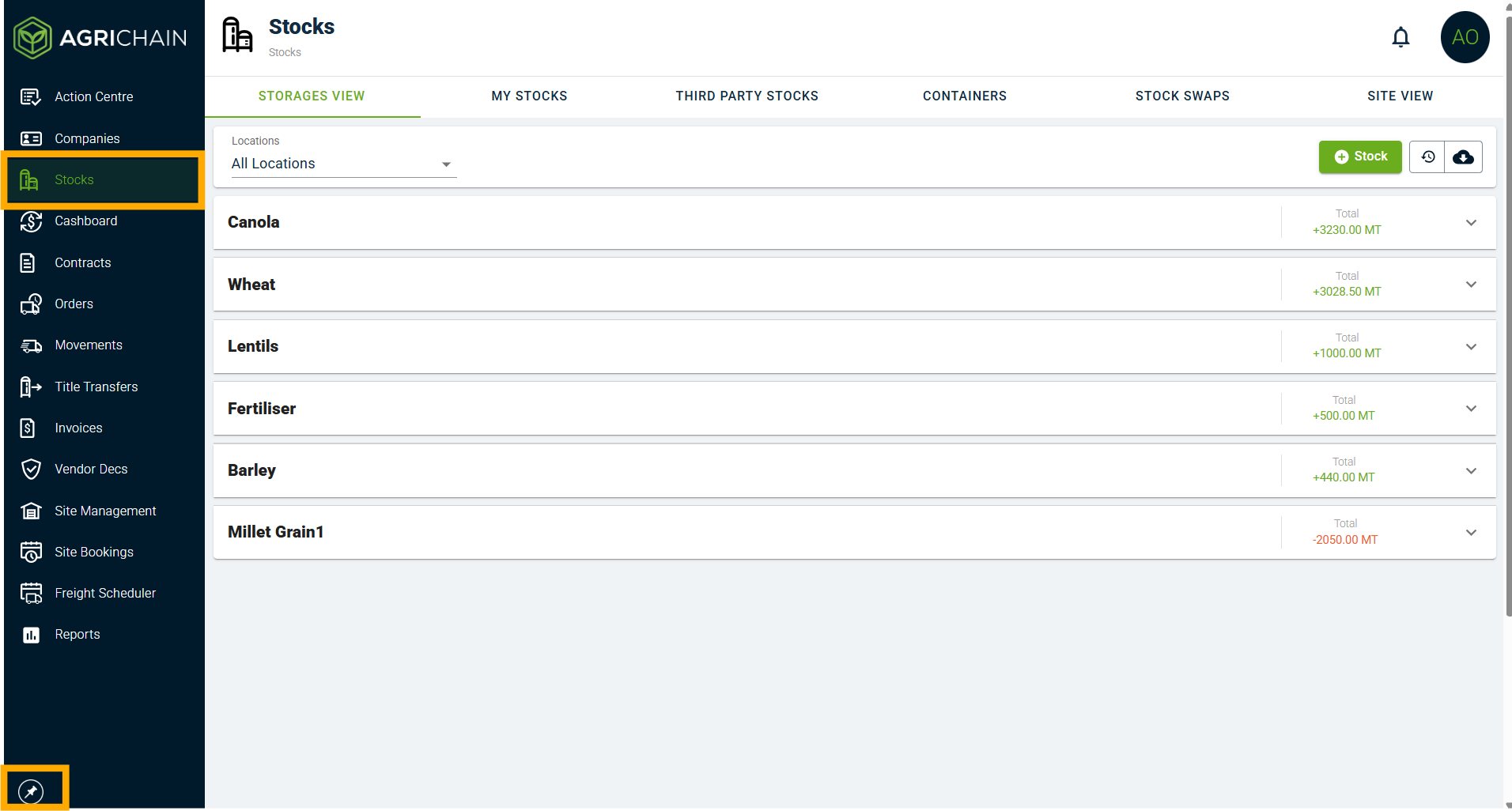
- On the Stocks page, go to the Storages View tab.
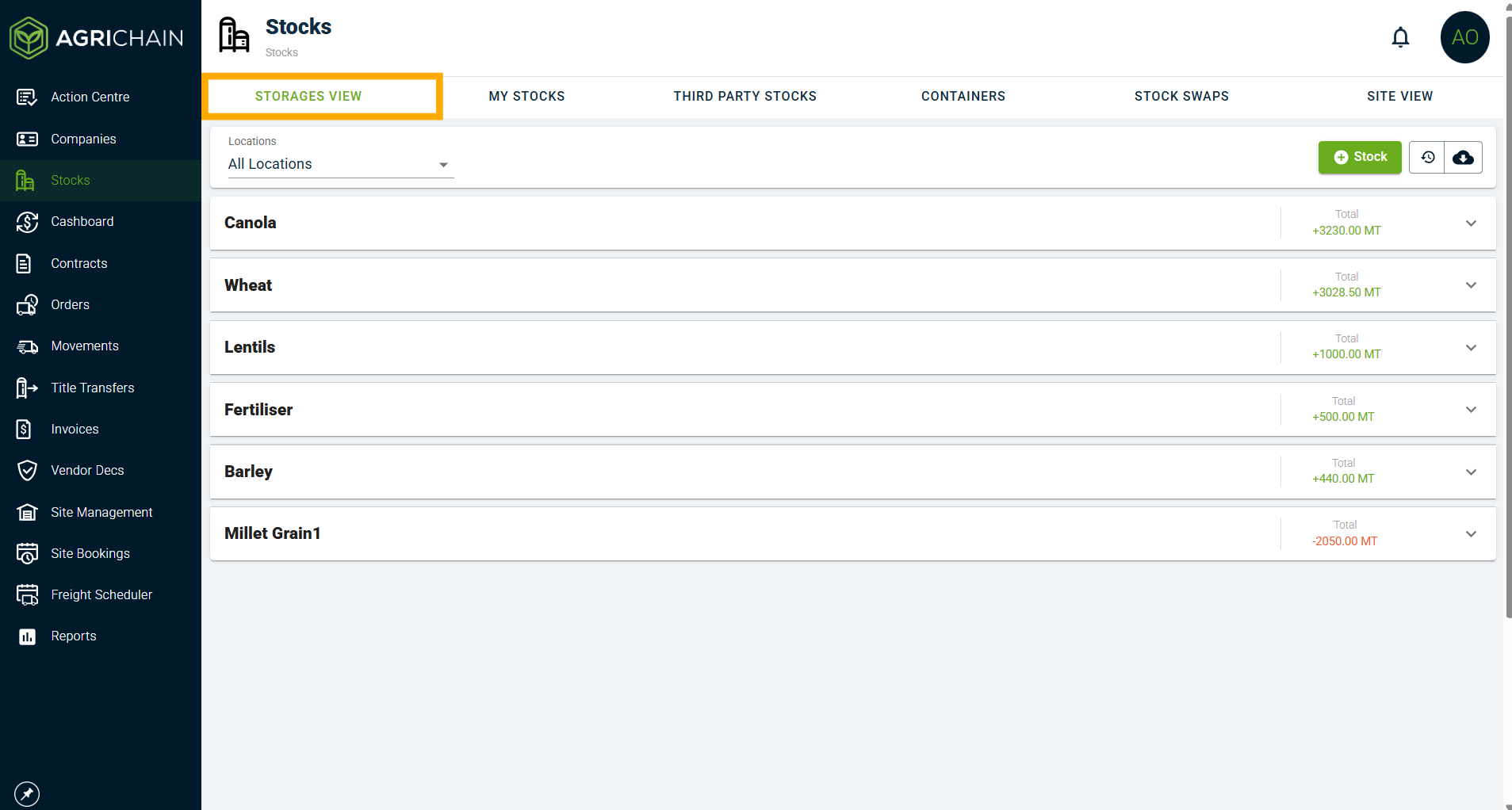
- Locate the Commodity line you are after. Now click on the 3-dot menu for that line and select "Storage To Storage Transfer" from the dropdown menu.
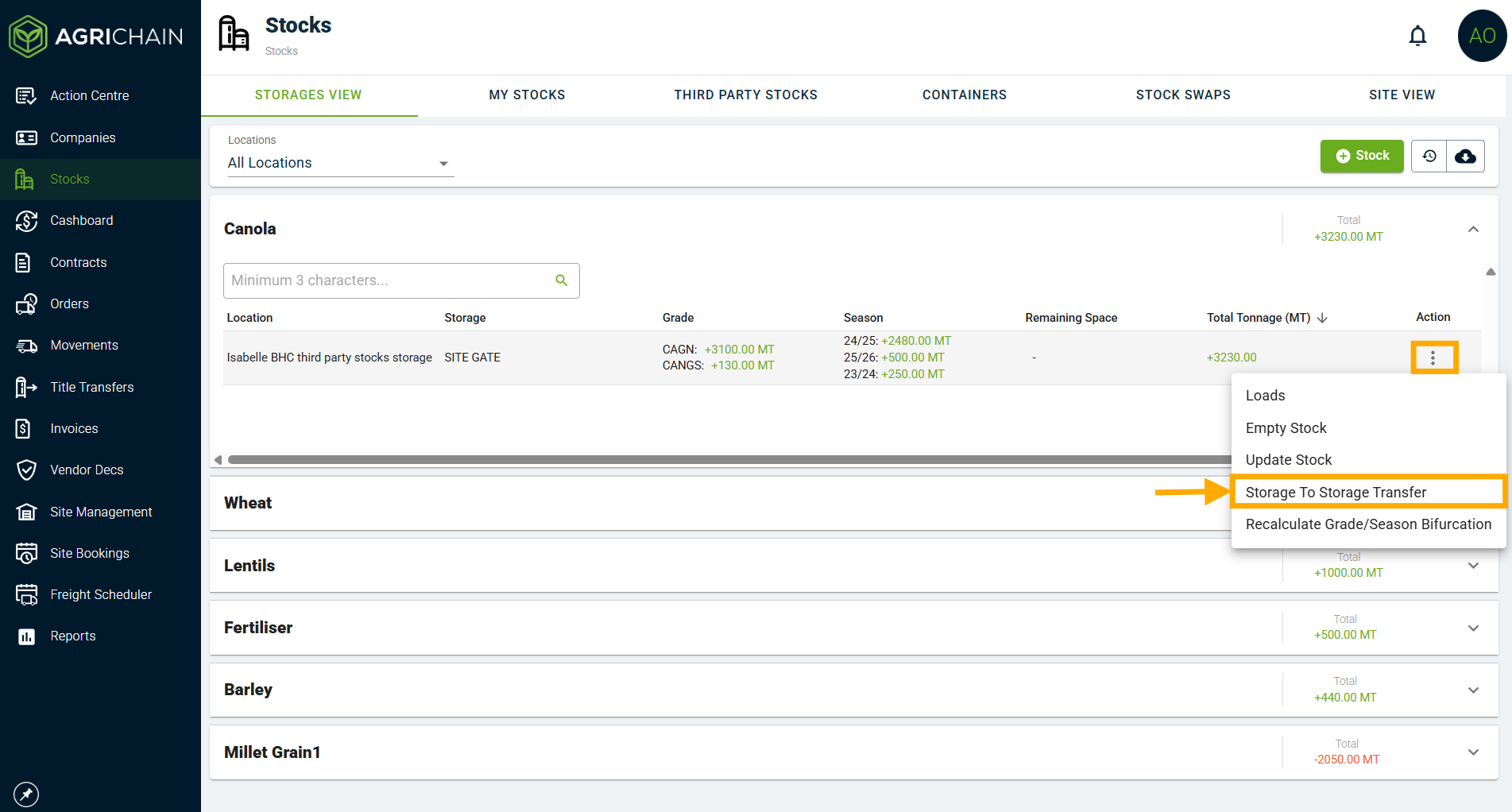
- A pop-up page will appear, proceed to fill in the required details on it. Click on the "CONFIRM" button once done.
- Outload storage and commodity are locked as per the storage line item selected.
- Users can decide which grade stock should be reduced from outload storage, if there is not enough of the given grade, the stock for it will go into negative.
- Transfer tonnage cannot be more than tonnage in the storage at the time.
- There is a "Comments" field which is useful to use to explain why the stock is being relocated, to keep an audit trail.
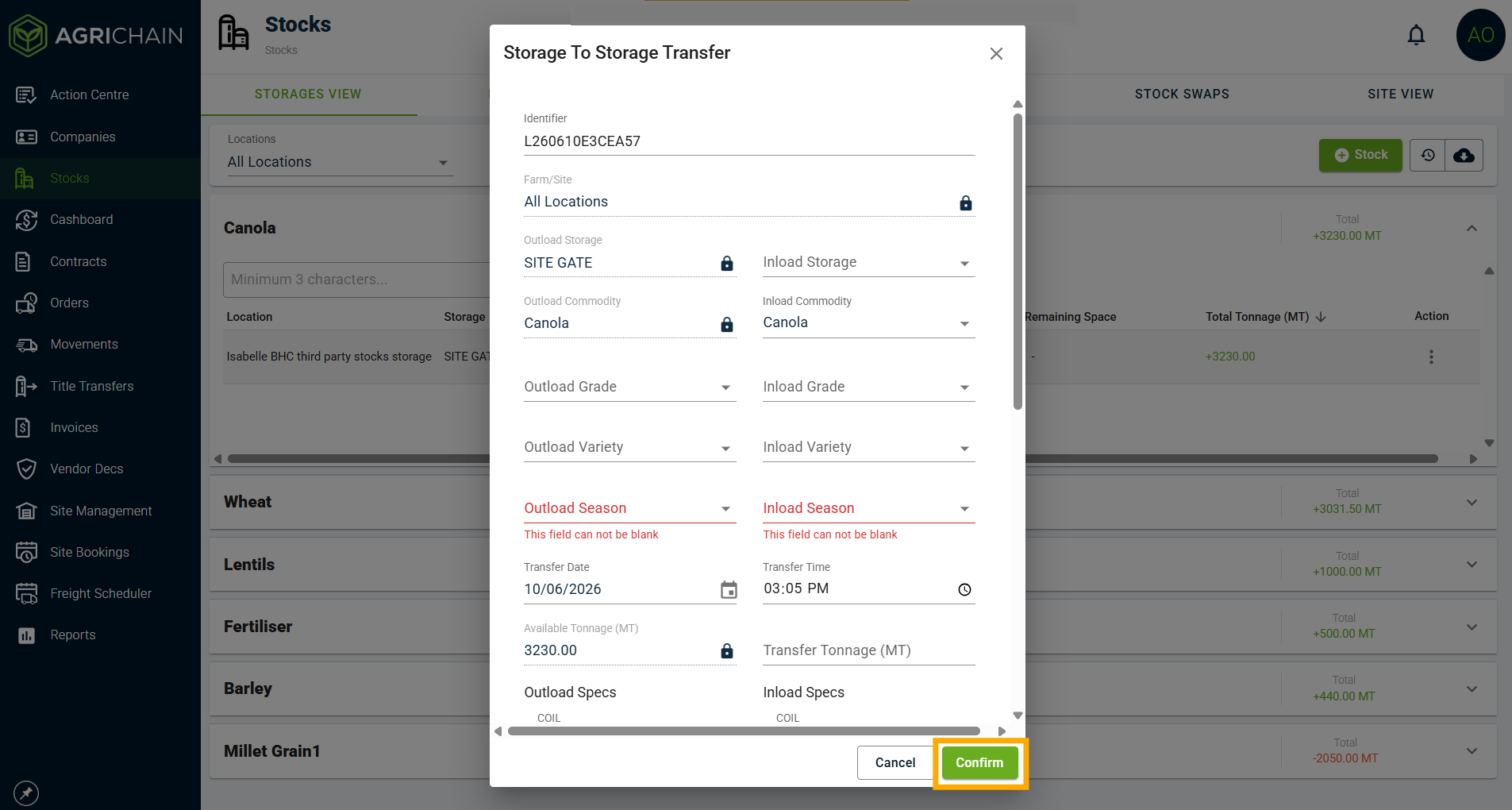
Note: To simultaneously Regrade or Reseason on both Ownership View and Storages View, please enter ownership details.
FAQs
Why can't I see Storages View in the Stocks module?
The Storages View is only available for paying users on AgriChain. To subscribe, please get in touch with us on support@agrichain.com
Can stock be transferred to some other companies storage?
The Storage to Storage transfer feature only allows users to transfer from one storage of their own to another. To transfer to an external storage please use the Inload/Outload function.
Related Articles
Was this article helpful?
That’s Great!
Thank you for your feedback
Sorry! We couldn't be helpful
Thank you for your feedback
Feedback sent
We appreciate your effort and will try to fix the article